Coming home from work stressed: a one-breath reset at the front door
Six-fifteen. A dad is on the front step, stressed from work, the whole day still on him. Somebody inside asks him something, and what comes out is sharper than he meant. Most of this guide is about the thirty seconds before that door opens, and the first thing he says after it.
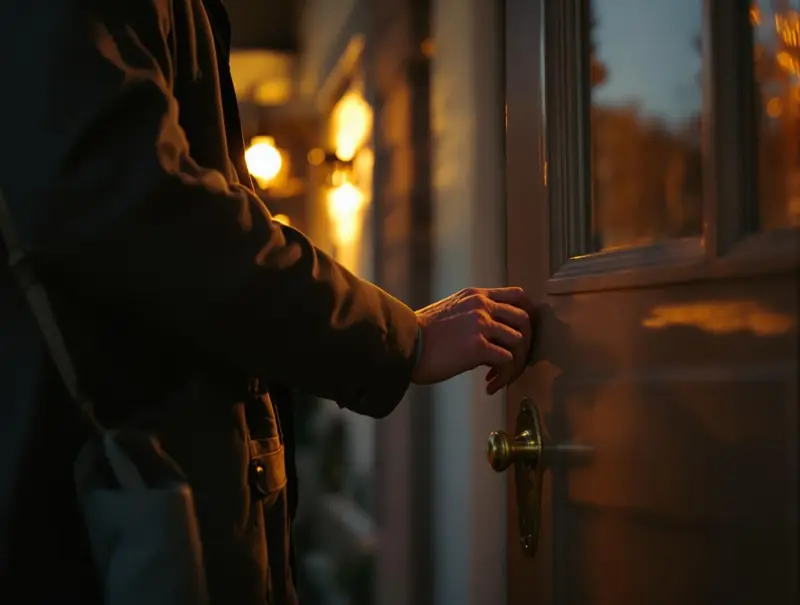
Before you open the front door, stop for one breath and ask yourself: what weather am I bringing in? You don't have to fix it. Just know it. Then walk in on purpose: greet your kids before you say anything about shoes, homework or the mess. If you need ten minutes, say so in one plain sentence that makes clear it isn't about them, and come back when you said you would.
What's hardest right now? Tap the closest one to start the free quiz.
Keeping my cool when they push it Putting my phone down for them Leaving work stress at the door Getting more than “Fine.” out of them Doing it differently than my dad did Having patience left by eveningFour quick questions, about a minute. One thing to try tonight. No email needed.
Who gets the worst of a bad day?
Often whoever is there when it lands. Holding it together at work can use up a lot, and there may be less left by the time a dad gets home.
Week eight of The Better Father puts it this way: your mood walks into every room a half-second before you do, and the people in the house read it and adjust before you've said a word. A kid who can't tell why Dad is short with them may decide it's about them.
What's the reset at the door?
It takes one breath. That's the point; you'll actually do it.
Before you walk into your house tonight, stop at the door for one breath and ask: what weather am I bringing in? Then walk in on purpose. With a little one: if they come running, get down to their height for the first minute, before your bag, your phone or the mail. With an older kid: say hi to them before you say anything about shoes, homework or the mess. If the weather's bad, say so in one plain sentence that makes clear it isn't about them. If you work from home, the door is the one out of your office.
Notice the question isn't “how do I get rid of this mood?” You may not be able to. It's “what am I bringing in?” A name for it is enough: tired, wound up, behind, angry at my boss. Once you've named it, it can be harder for it to come out sideways at a seven-year-old with one shoe on.
What should I say in the first minute?
Start with the people. Say hello to the people before you deal with the house. Then, if the day is still on you, say one sentence that tells them it isn't about them. Day four of the program, the first week, is exactly this:
If work is coming home with you tonight, say one sentence in the first minute after you walk in that makes clear it isn't about them. With a little one: "Daddy had a hard day. I need five minutes, then I'm coming to play." With an older kid: "Rough day at work. You didn't do anything. Give me ten minutes, then I want to hear about yours." Then come back when you said you would. If nobody else can cover the five minutes, skip the break: say the sentence and stay. If you work from home, the walk in the door is the walk out of your office.
A few more ways to say it, sized to the kid in front of you:
A toddler who comes running“Hi, buddy. I missed you.” Get down to their height, before the bag, the phone or the mail.
A school-age kid“Hey. I'm wiped out from work, so I'm a bit quiet. You didn't do anything. Show me one thing from today.”
A teenager“Long day. I'm going to change, then I'm around if you want to eat together.” Then actually be around.
Keep it short. Kids don't need the story of your day. They need to know the mood isn't a verdict on them.
What helps on the way home?
- Close the workday on purpose. Before you leave, write down the first thing you'll do tomorrow. A problem written down for tomorrow is one less thing to carry through the door.
- Pick a spot on the drive. A traffic light, the turn onto your street, the last stop on the train. When you pass it, the workday is over for tonight. It sounds small. It gives you a moment every day instead of hoping one shows up.
- Leave the phone in the bag. The first fifteen minutes home set the tone. If you keep checking it at the table, part of you is still at work. How to stop being on your phone around your kids →
- Know your first sentence. Have it ready before you open the door, so you don't have to come up with it while you're tired.
What if I work from home?
Then the walk in the door is the walk out of your office, and it's easy to skip because it's only ten steps. Make it a real door anyway:
- End at a set time, and tell the kids what it is: “I'm done at five-thirty.” Then be done at five-thirty.
- Shut the laptop, not just the lid of your attention. If the last email is still open, you'll go back to it.
- Walk around the block, change your shirt, or take the dog out before you join the family. Anything that marks the change.
- Do the one breath at the office door, the same as you would at the front door.
What if the house is chaos when I walk in?
Sometimes you open the door into noise: two kids fighting, dinner burning, your partner handing you the baby before you've put your bag down. That's when the sharp sentence comes out.
Greet first, then deal with it. “Hey, I'm home” takes two seconds and changes how the next thing lands. Then take one specific job without being asked: “I've got bath,” or “You two, come help me with plates.” A dad who walks in and picks up a job is easier to be around than one who walks in and starts correcting.
If you need ten minutes and the house can't spare them, skip the break. Say the sentence that makes clear it isn't about them, and stay.
What if I need time before I can be with them?
Say so, plainly, instead of being half there for an hour. “Rough day. Give me ten minutes, then I'm all yours.” A kid may be fine waiting ten minutes for a dad who then shows up. The harder thing is a dad who's in the room but somewhere else all evening.
Two rules make it work: say it before anything goes wrong, not after you've already snapped, and actually come back in ten minutes. If you don't, the line stops meaning anything.
If there are two parents at home, agree on this ahead of time, not at the door. Something like: you get ten minutes when you walk in, and your partner gets ten after dinner. Then it's a plan, not a favor you're asking for in the hallway.
What if I've already snapped?
Go back, as soon as you can keep your voice level: “I came in hot. That wasn't about you. I'm sorry.” Leave off the explanation about your boss. A kid can hear “I'm sorry, but I had a long day” as “it'll happen again whenever Dad has a long day.” More apologies with the “but” taken out →
Then try the reset again tomorrow. One bad evening doesn't cancel the practice. The question is what happens on the next one. How to apologize to your child after yelling →
What if I'm hardly home at all?
If the hours are the problem as much as the mood, that's its own guide. Dad guilt about working too much → If work takes you away overnight or for days, here's the guide for dads who travel for work →
Is it more than a bad day?
If you're coming home this way most days, for weeks, it may be more than a habit. Exhaustion that doesn't lift, dreading every morning, drinking to come down, or feeling numb are worth taking to your doctor. That's not weakness; it's maintenance.
If it's work stress you keep bringing home, the free quiz page on work stress has one more thing to try tonight. Other problems, sorted by your kid's age, are on the guides for dads page.
More guides for dads
- How to stop yelling at your kidsWhat to notice right before the yell, and what to practice instead.
- The phone in your pocketWhere the phone goes for two hours a night, and what to do with the time.
- How to apologize to your kid after yellingWhat to say, when to say it, and the one word to leave out.
- Traveling for workWhat to say before you leave, a call that fits their age, and the first evening back.